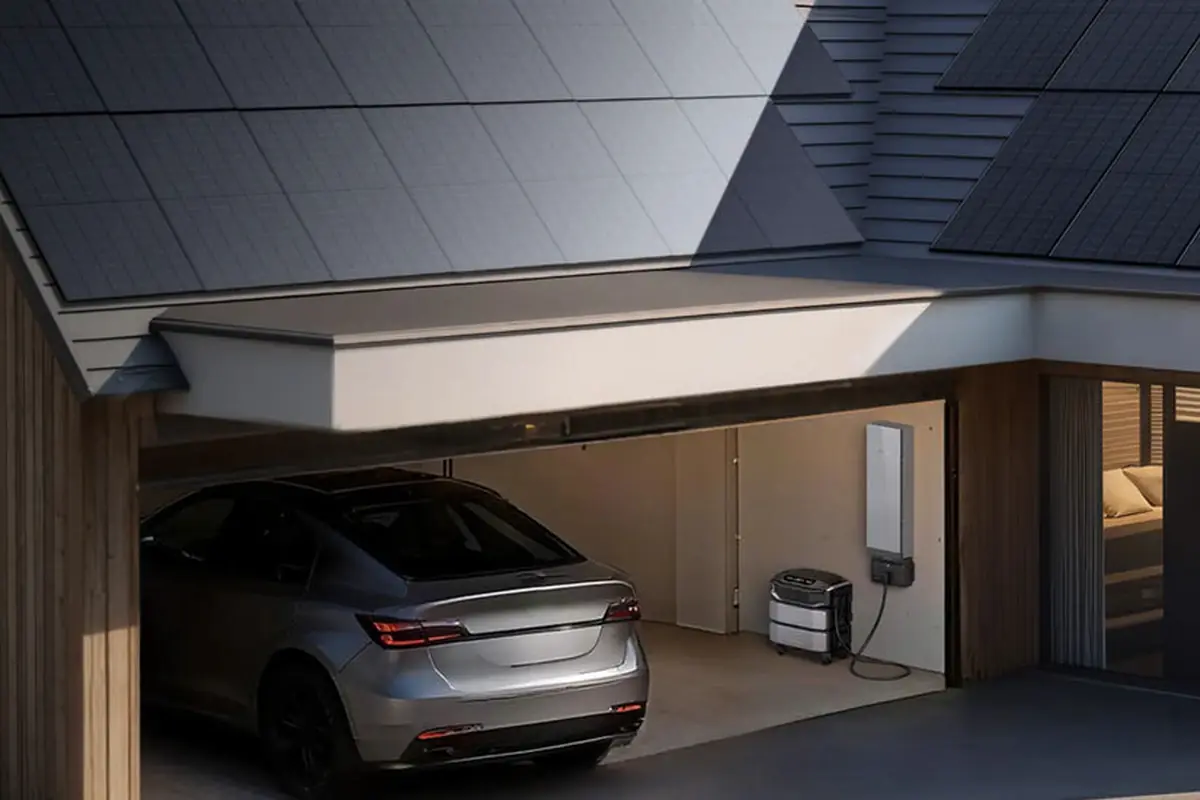
EcoFlow is best understood as a battery company that moved outward from portable power. It began with products people could carry, then added solar charging, expandable batteries and installed home-energy equipment. That progression matters because a familiar logo now covers very different jobs: charging a laptop in a tent, keeping a fridge alive during an outage, or supporting a household electrical system.
This story separates verifiable company history from promotional language. Market-share, "first" and appliance-percentage claims are not treated as neutral facts unless a named third party supplied the evidence.
Origin: engineers, not a lifestyle brand
EcoFlow says it was founded in 2017 by a group of battery engineers. Founder and CEO Dr Bruce Wang previously worked on battery technology after completing doctoral research in new-energy storage. In interviews, Wang connects the company's purpose to his upbringing near a desert edge and his later interest in renewable energy rather than to a single product category. [1][3][4]
Those interviews describe a difficult hardware startup rather than an overnight success. Wang says the team worked through funding pressure and technical setbacks before early products found traction. [3]
EcoFlow's announcements list operational headquarters in Seattle, Düsseldorf, Irvine and Tokyo, plus a Singapore business and data center; Chinese-language company materials identify Shenzhen as the domestic headquarters. [1][2] The reviewed public sources do not disclose a conventional parent company above the EcoFlow group, so this profile does not invent one.
The first product led to the defining product
EcoFlow's innovation timeline places the RIVER portable power station at the start of its consumer line in 2017. The more consequential step came in 2019 with DELTA, which paired larger storage with fast AC charging. Founder interviews describe that charging-time reduction as the moment EcoFlow became known for more than a large power bank. [2][3]
The DELTA line then expanded upward. In 2021, TIME included the DELTA Pro in its "100 Best Inventions" collection. TIME described a 3,600Wh battery-powered unit that could recharge from a wall outlet, solar panels or an EV charging station, and noted that multiple units could be networked. That recognition is specific to the 2021 DELTA Pro and should not be repeated as a blanket award for every later model. [5]
The next shift was architectural. EcoFlow moved from standalone stations toward connected home products. PowerStream for balcony solar and PowerOcean for installed storage appeared in 2023–2024, and the company now presents portable power, solar, EV charging and home-energy management as one ecosystem. [2]
How the product ladder is organized
The current US catalog gives a clearer view of positioning than the company's broad "energy ecosystem" phrase. Three verified examples show the ladder:
| Job | Model | Published base specification | US price snapshot |
|---|---|---|---|
| Light travel and short device backup | EcoFlow RIVER 3 | 245Wh, 300W rated AC output, 7.8 lb [7] | From $199, reduced from $239, checked 2026-11-03 [7] |
| Flexible mid-sized portable power | EcoFlow DELTA 3 Plus | 1,024Wh, 1,800W AC output, 12.5 kg [8] | $719, reduced from $799; standalone page showed out of stock, checked 2026-11-03 [8] |
| Large portable or expandable home backup | EcoFlow DELTA Pro 3 | 4,096Wh, 4,000W AC output, 51.5 kg [9] | From $2,799, reduced from $3,299; limited stock, checked 2026-11-03 [9] |
That ladder is the useful part of EcoFlow's positioning. RIVER 3 competes on low weight and simple device loads. DELTA 3 Plus sits around the crowded 1kWh class and adds battery expansion plus unusually high solar input. DELTA Pro 3 changes the conversation to 120V/240V output, very high weight and a much larger installed or semi-installed system.
The differences are not merely capacity. Moving from RIVER 3 to DELTA Pro 3 also means a much larger object, more demanding recharge infrastructure and a more complex ownership plan.
Credibility: what can be checked
Two pieces of external recognition stand out because the original sources remain available. TIME's 2021 listing independently documents the DELTA Pro recognition. [5] In 2024, SGS published a separate certification announcement for DELTA 3 Plus, describing a five-star Performance Tested Mark for its fast-and-safe-charging claim after third-party evaluation. [6]
Those sources support the award and certification. They do not prove that every EcoFlow product charges equally quickly or runs every appliance. The SGS mark applies to DELTA 3 Plus; the TIME recognition applies to the 2021 DELTA Pro.
EcoFlow also describes itself as No. 1 in smart home energy storage and says its DELTA 3 series can support "99% of household devices." The reviewed public material did not provide enough independent methodology for this profile to repeat either statement as a neutral market fact. Treat them as company claims until a current third-party ranking or test protocol is available. [1][2][8]
What EcoFlow does not do well
The clearest weakness in the available evidence is consistency at the edge of a product's capability. Independent reviews agree that DELTA 3 Plus is fast and versatile, but they do not agree on thermal behaviour under sustained high load. How-To Geek reported a loud fan and concerns about temperature control; The Solar Lab recorded high internal temperatures and inconsistent fan behaviour during a 1,573W test. [10][11]
A later 2026 test by The Independent reported that the unit maintained composure with mixed office loads, that the fan began beyond roughly 1,500W and that it remained fairly quiet. [12] These reports may reflect different firmware, units or test conditions, but public materials do not establish that. The responsible conclusion is not "the problem is fixed" or "every unit overheats." It is that high-load buyers should verify current firmware, return terms and their own sustained-load use case.
EcoFlow's ecosystem also creates more configuration choices. Expansion batteries may require a specific cable or adapter, regional models differ and accessories are often separate. That flexibility is valuable only when compatibility is confirmed before checkout. [8][9]
Our take: where EcoFlow is most credible
Our take: EcoFlow is strongest when a buyer wants portable power with a credible path to more solar or battery capacity and is willing to plan that path. DELTA 3 Plus best expresses that idea. The brand name should narrow the research, not finish it.
Who should trust EcoFlow
EcoFlow deserves a serious look from a household that wants fast recharge, multiple output types and an expandable portable platform, or from campers and mobile workers who value solar input and app monitoring. Trust the brand only after checking the exact model, regional voltage, included cables, expansion requirements and evidence for the intended loads.
Readers who need a light station for phones and laptops should start with RIVER 3. Readers who need permanent whole-home backup should use installer-led planning and compare the installed system, not a portable product page. [7][9]
Official site
Visit EcoFlow US
Check current models, regional configuration, included accessories and availability on EcoFlow's US store.
Some links to manufacturer stores are commercial. We may earn a commission at no extra cost to you. Read the disclosure.
Evidence note
This brand story is desk research based on EcoFlow publications, founder interviews and independent reporting accessed November 3, 2026. It does not claim first-hand testing. Company rankings and performance claims are identified as company statements unless a named third party verified them.
Source list
- [1]Power a New World — About EcoFlow USEcoFlow · accessed 2026-11-03
- [2]Home Energy Ecosystem Solutions 2025 catalogEcoFlow · accessed 2026-11-03
- [3]Founder Spotlight: Bruce Wang on building a sustainable energy futureHongShan Capital Group · accessed 2026-11-03
- [4]After amped growth, EcoFlow comes for the glampersTechCrunch · accessed 2026-11-03
- [5]EcoFlow DELTA Pro: The 100 Best Inventions of 2021TIME · accessed 2026-11-03
- [6]EcoFlow awarded SGS Performance Tested Mark for DELTA 3 PlusSGS · accessed 2026-11-03
- [7]EcoFlow RIVER 3 portable power stationEcoFlow US · accessed 2026-11-03
- [8]EcoFlow DELTA 3 Plus user manualEcoFlow · accessed 2026-11-03
- [9]EcoFlow DELTA Pro 3 portable power stationEcoFlow US · accessed 2026-11-03
- [10]EcoFlow Delta 3 Plus reviewHow-To Geek · accessed 2026-11-03
- [11]EcoFlow DELTA 3 Plus reviewThe Solar Lab · accessed 2026-11-03
- [12]Best portable power stations for 2026, tested by a tech expertThe Independent · accessed 2026-11-03