BLUETTI sells products in several overlapping families: Elite fixed-capacity stations, AC-series modular systems, Apex home-oriented hardware and multiple expansion-battery generations. The product names do not share one universal battery or accessory set.
This guide starts with the load and ownership plan, then places three buying tiers around verified models and configurations. Prices are US snapshots from November 3, 2026.
Start with the load and the place
List the devices you need to run, their continuous watts and startup surge. Then decide whether the station will be carried, rolled or kept in one place. A 53 lb unit can serve a garage or van well and still be a poor choice for repeated stairs.
Next decide whether expansion is required. Fixed-capacity Elite models are easier to understand; modular systems can grow, but they also create more compatibility decisions. A larger label is not an automatic upgrade if the extra weight and hardware do not fit the site.
BLUETTI recommendation matrix
| Tier | Model or family | Verified published detail | Best-fit buyer | US price snapshot |
|---|---|---|---|---|
| Compact 1kWh | Elite 100 V2 | 1,024Wh; 1,800W | Camping, mobile work and short outages where movement matters | $499 [1] |
| High-output 2kWh | Elite 200 V2 | 2,073.6Wh; 2,600W; 1,000W solar; 53.4 lb [2][3] | Van, workshop and short home backup near the load | $899 [2] |
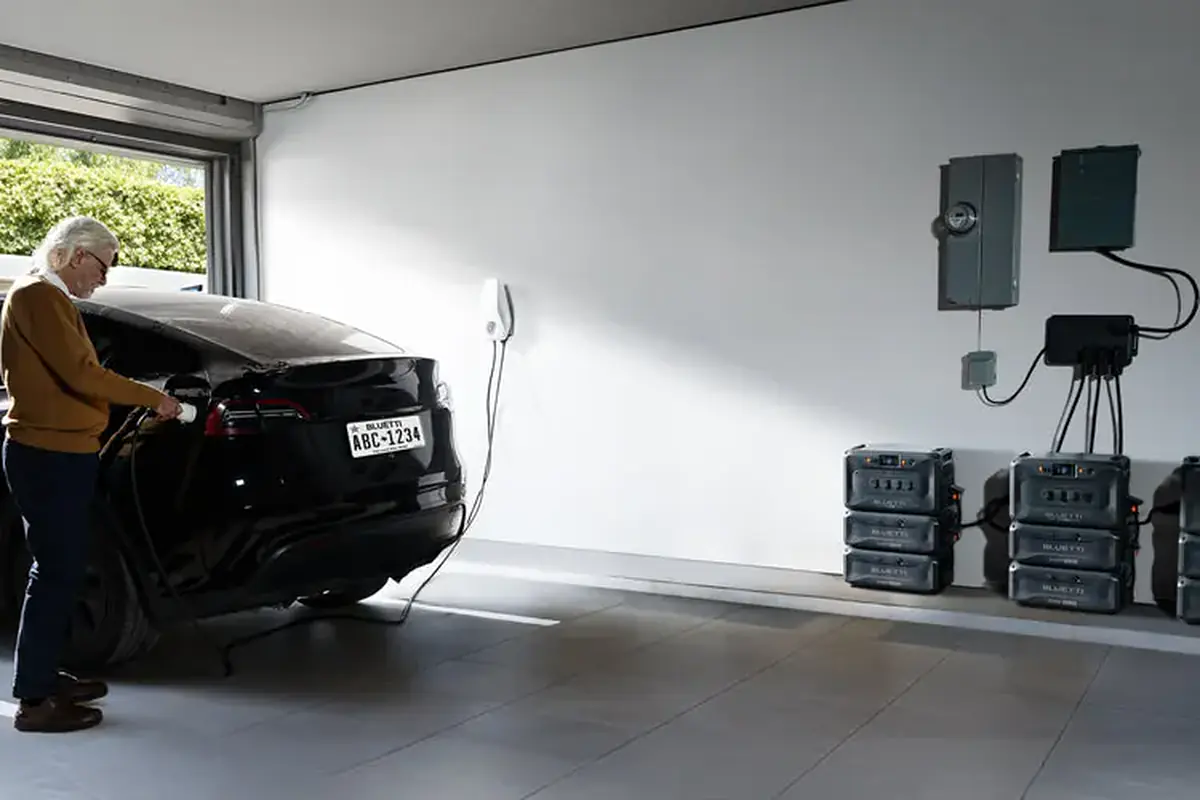
| Expandable / home-oriented | Apex 300, AC300 or AC500 family | Configuration-specific capacity, output, battery compatibility and transfer hardware | Buyers planning a larger whole-home or modular system | Price not generalized; confirm the exact bundle |
The high-tier label is not a single product recommendation. BLUETTI's modular systems require exact model matching, and BLUETTI itself says professional installation is required for home ESS products. Treat a modular purchase as a system project rather than an oversized camping battery. [4]
Elite 100 V2: small enough to move
Elite 100 V2 is the lower-capacity entry into the current Elite line. BLUETTI lists 1,024Wh capacity and 1,800W output at $499. It can cover laptops, routers, cameras, lights and selected small appliances, but the 1kWh battery remains a limited resource when a heater or kettle is involved. [1]
This tier is best for a buyer who prioritizes movement and straightforward ownership. If the load list already includes a full-size refrigerator for a day, multiple power tools or a high-wattage heater, the 1kWh battery may run out before the job ends.
The fixed capacity also means no later battery expansion. Buyers expecting longer outages should calculate the cost of a second station or move to a larger model rather than assuming the small unit can grow.
Elite 200 V2: the high-output portable choice
Elite 200 V2 raises capacity to 2,073.6Wh and AC output to 2,600W. Its 1,000W solar input and four AC outlets make it more capable than the lighter Jackery Explorer 2000 v2 in those specific areas, while its 53.4 lb weight makes it less portable. [2][3][5][6]
Independent tests support the hardware. StorageReview measured 1.91kWh delivered and stable UPS behavior in a small server rack. The Solar Lab measured 94% efficiency and sustained a 3,000W overload for more than two minutes. [5][7]
The most important caveats are physical. The unit is not weatherproof, has no wheels and depends on an app for some settings. It fits a protected van, garage or workshop better than a wet campsite. [2][3][7]
Buy it when the load list fits 2,600W, the unit can stay near the equipment and 2kWh is enough. Do not buy it only because it has the largest watt-hour number at a discount.
Modular systems: choose the battery family first
BLUETTI's Apex, AC300 and AC500 systems can support expansion and larger home configurations, but the exact battery family, inverter, transfer equipment and installation requirements change by model. The buying order should be:
- Define the backed-up circuits and total load.
- Confirm whether the installation needs a transfer switch or panel.
- Select the inverter and battery family that support that plan.
- Verify local permits, installer responsibility and warranty.
Do not buy a battery first and design the system around it. This is where the portable-product mindset becomes expensive.
Who should not choose BLUETTI
Do not choose Elite 200 V2 if the unit must be carried up stairs regularly, packed into a small car without help or used in rain. Its 53.4 lb weight and lack of weather protection are real ownership costs. [2][3]
Do not buy a modular BLUETTI system solely from a headline capacity. Confirm the number of batteries, inverter configuration, transfer method and installation requirements. A 12kWh or 48kWh figure may describe a complete multi-component system rather than one box. [4]
Do not choose a portable model if the goal is a permanent whole-home battery with automatic circuit-level backup, permits and installer commissioning. Use a qualified professional and compare the installed system.
Do not give the app a veto over hardware you like, but test the features you need. Independent reviewers describe BLUETTI's interface as functional but less polished than some competitors. [3][7]
Common traps found in the evidence
Treating Power Lifting as ordinary output
Power Lifting supports selected pure resistive appliances above the rated inverter limit. It is not a promise that any load can exceed 2,600W continuously. Check the appliance type and startup behavior. [2]
Confusing battery generations
BLUETTI's modular and fixed systems use different battery families. An accessory that fits one model may not fit another. Confirm the exact product, battery, cable and firmware compatibility before buying used equipment. [4]
Planning solar around the input ceiling
A 1,000W solar input is a maximum, not expected production. Panel voltage, current, shade, angle and temperature determine what actually enters the battery. Use a panel configuration that remains inside the 12–60V, 20A input window. [2][3]
Ignoring weight before price
The 2kWh Elite is 53.4 lb. Its value falls if the buyer cannot move it to the truck, garage or outage location. Measure the route and storage space before ordering. [2][3]
Treating IP protection on one component as whole-system protection
An IP-rated battery or accessory does not make every port and connector safe for rain. Follow the manual for the complete product and keep portable stations out of standing water. [2][3]
Purchase channel advice
Use BLUETTI's official US store or a clearly identified authorized seller. For a tracked purchase from Power Storage Guide, the outbound CTA uses the operator-supplied BLUETTI US link and resolves to the current storefront. Confirm the model, included AC cable, solar accessories, battery family, shipping region and warranty in the cart.
For modular systems, request a configuration quote and installation plan. Do not assume a portable station plus a transfer switch is equivalent to a permitted home-energy installation.
Current US snapshots on November 3, 2026 listed Elite 100 V2 at $499 and Elite 200 V2 at $899. Bundle prices vary with solar panels, chargers and batteries. [1][2]
Final checklist
- Does the exact model meet continuous and surge requirements?
- Is fixed or expandable capacity the better ownership path?
- Can one person move and store it safely?
- Will it remain dry and within the temperature range?
- Is the solar array compatible with the port voltage and current limits?
- Are the battery and cable compatible with the exact generation?
- Does the intended installation need an electrician or transfer switch?
The correct BLUETTI purchase is the configuration that satisfies those answers. The brand's broad catalog is useful only after the system boundaries are clear.
Compare current BLUETTI US models
Check BLUETTI prices and configurations
Confirm the exact model, bundled accessories, warranty and stock before ordering.
Some links to manufacturer stores are commercial. We may earn a commission at no extra cost to you. Read the disclosure.
Evidence note
This is desk research, not a hands-on test. US models and prices were checked November 3, 2026. Buyers must confirm the exact model, configuration, transfer method and regional electrical requirements.
Source list
- [1]BLUETTI Elite 100 V2 collectionBLUETTI US · accessed 2026-11-03
- [2]BLUETTI Elite 200 V2 product pageBLUETTI US · accessed 2026-11-03
- [3]BLUETTI Elite 200 V2 user manualBLUETTI · accessed 2026-11-03
- [4]BLUETTI portable power station catalog and FAQBLUETTI US · accessed 2026-11-03
- [5]BLUETTI product milestonesBLUETTI US · accessed 2026-11-03
- [6]Bluetti Elite 200 V2 reviewThe Solar Lab · accessed 2026-11-03
- [7]Bluetti Elite 200 V2 portable power station reviewTechRadar · accessed 2026-11-03
- [8]Jackery Explorer 2000 v2 product pageJackery US · accessed 2026-11-03
- [9]Anker SOLIX F2000 product pageAnker SOLIX US · accessed 2026-11-03
- [10]BLUETTI Apex 300 product pageBLUETTI US · accessed 2026-11-03