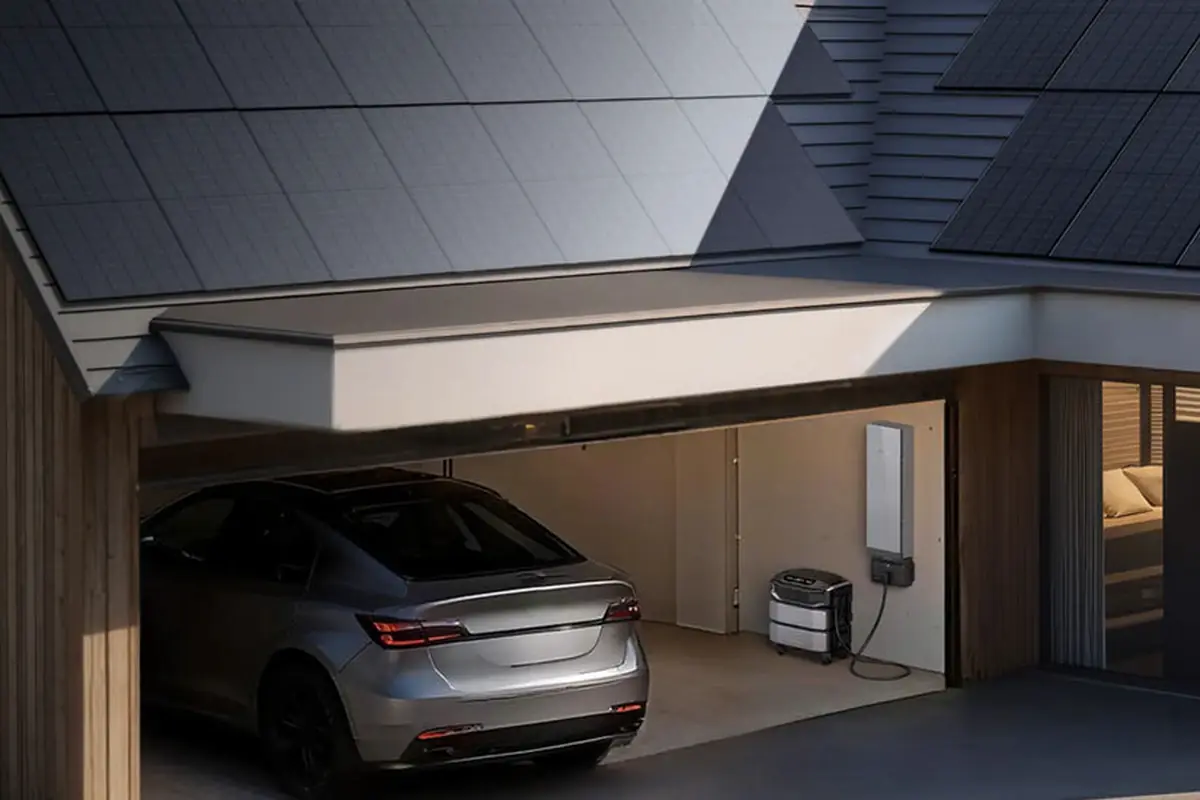
Choosing an EcoFlow power station is mostly a question of matching the product to the job. Capacity alone does not tell you whether a unit can start a pump, fit in a vehicle, recharge during a cloudy week or grow into a larger home backup system.
This guide uses a load-first method and three verified US models: RIVER 3, DELTA 3 Plus and DELTA Pro 3. Prices and availability are snapshots from November 3, 2026. They are not permanent offers.
Start with the load list, not the capacity
Write down every device the station must run. For each one, record continuous watts, startup surge where known, expected hours and whether it is plug-in or hardwired. Separate essentials from conveniences.
A router, laptop and phone charger may total less than 100W. A refrigerator cycles, a pump can surge at startup and a heater can hold a high load for hours. Those devices demand different inverter and battery decisions even when the advertised watt-hour number looks similar.
Use the appliance label, manual or a suitable energy monitor. Do not divide battery capacity by appliance watts and call the result guaranteed runtime. Conversion losses, temperature, battery reserve and inverter behavior all affect delivered energy. [4]
Put the selection criteria in the right order
| Priority | What to compare | Why it matters |
|---|---|---|
| 1 | Continuous AC output and surge | Determines which appliances can run or start safely. |
| 2 | Usable capacity and load profile | Determines how long the job can continue between charges. |
| 3 | Recharge sources and input limits | Determines recovery during an outage, trip or cloudy period. |
| 4 | Ports and simultaneous limits | A high total output does not mean every port can run at maximum together. |
| 5 | Weight, shape and transport | A powerful station that cannot be moved to the job is the wrong station. |
| 6 | Expansion and accessory compatibility | Matters only if the exact batteries, cables and limits are available. |
| 7 | Warranty, support and regional version | Determines what happens after the purchase. |
Practical weights change by buyer. For a car camper, portability and solar recharge may deserve more weight than expansion. For a homeowner using the station as a short-run outage bridge, output, UPS behavior and the exact transfer plan matter more.
EcoFlow model recommendation matrix
| Tier | Model | Verified base specification | Best-fit job | US price snapshot |
|---|---|---|---|---|
| Entry | EcoFlow RIVER 3 | 245Wh; 300W rated, 600W surge; 7.8 lb; 110W solar input [1] | Phones, laptops, lights, cameras and light travel | From $199, reduced from $239; checked 2026-11-03 [1] |
| Mid | EcoFlow DELTA 3 Plus | 1,024Wh; 1,800W rated, 3,600W surge; 12.5 kg; 1,000W total solar input [2][4] | Flexible camping, mobile work and short outage backup | $719, reduced from $799; standalone page showed out of stock; checked 2026-11-03 [2] |
| High | EcoFlow DELTA Pro 3 | 4,096Wh; 4,000W rated, 8,000W surge; 51.5 kg; 120V/240V output [3] | Larger backup loads, RV systems and installer-planned expansion | From $2,799, reduced from $3,299; limited stock; checked 2026-11-03 [3] |
The prices represent the base products displayed by EcoFlow's US store. Taxes, delivery, installation, solar panels and extra batteries can change the real cost. Check the cart rather than the marketing headline.
RIVER 3: a small station for light loads
RIVER 3 is the right starting point when the load list is modest. Its 300W continuous rating supports lower-wattage electronics, fans and lights, while X-Boost allows selected higher-load devices up to 600W. EcoFlow lists two AC outlets, one 100W USB-C port, two USB-A ports and a 12V car socket. [1]
At 7.8 lb, it is realistic to move between rooms, cars and tents. The 245Wh battery can also recharge in about one hour from AC under EcoFlow's stated conditions, or in about 2.6 hours from a 110W solar panel. Those figures are manufacturer tests, not guarantees for every outlet, panel or weather condition. [1]
Do not buy RIVER 3 for a full-size fridge, a heater, a kettle or a whole-home outage. Its value is convenience and low weight. Buyers who already know they need more than light-device power should move up rather than paying twice.
DELTA 3 Plus: the flexible middle
DELTA 3 Plus is the broadest general-purpose choice in this three-model set. The 1,024Wh battery, 1,800W inverter and 13 ports support more appliances without turning the product into a two-person move. EcoFlow lists 12.5 kg / 27.6 lb and a five-year warranty. [2][4]
Its distinctive features are recharge and expansion. Two 500W solar inputs accept 1,000W total in the published input window, and compatible extra batteries can expand the system to about 5kWh. The extra battery is separate and may require a specified cable. [2][4]
Independent reports support fast wall charging. TechRadar called charging one of the model's strengths, Trusted Reviews measured about 87% efficiency at a 1,000W load and The Solar Lab recorded a 55-minute full AC charge. Those are useful positive data points. [6][7][9]
The caution is high-load thermal behavior. How-To Geek reported a loud fan and temperature-control concerns; The Solar Lab recorded high internal temperatures and inconsistent fan behavior. A later 2026 test by The Independent reported quiet operation and no overheating with mixed office loads. [7][8][9] The difference is unresolved in public sources, so plan conservatively if you expect long runs near maximum output.
DELTA Pro 3: a different class of purchase
DELTA Pro 3 starts at 4,096Wh and lists 4,000W continuous AC output, 8,000W surge and both 120V and 240V outlets. EcoFlow lists a 51.5 kg / 113.5 lb weight and expansion through compatible batteries and a Smart Home Panel for larger system configurations. [3]
This is not a casual camping upgrade from DELTA 3 Plus. It belongs to a class where installation, lifting, circuit planning and local electrical rules become part of the purchase. EcoFlow's page warns that the Smart Home Panel requires installation and that configuration-specific accessories are separate. [3]
DELTA Pro 3 can make sense for an RV, workshop or home-backup project that needs high output and 30A/50A-style outlet options. It is usually excessive for apartment outages, short camping trips or buyers who cannot safely move and store a unit over 50 kg.
Who should not buy an EcoFlow station
Do not buy any of these models if the real goal is a permanent whole-home battery with automatic circuit-level backup, permits and installer commissioning. A portable station can bridge an outage or support selected loads, but it is not a substitute for a designed home-energy system.
Do not buy DELTA 3 Plus or DELTA Pro 3 if transport is the dominant requirement and the loads are only phones, cameras and laptops. RIVER 3 is lighter and cheaper for that job. [1]
Do not buy RIVER 3 if the appliance list includes a full refrigerator, heater, large pump or power tool with a startup surge beyond its supported range. Move to a product whose exact rated and surge limits fit the appliance. [1]
Do not buy on capacity alone. A 5kWh expanded system is not useful if it cannot be carried, recharged or connected to the loads you need.
Common traps found in the evidence
Treating X-Boost as a higher continuous rating
X-Boost extends support to selected devices, but it does not turn every appliance into a safe load at the boosted number. EcoFlow lists separate rated and X-Boost figures. Check the exact appliance and startup behavior rather than assuming the largest number applies continuously. [2]
Assuming the standalone box includes solar or expansion
EcoFlow sells standalone, solar-panel and extra-battery bundles. The panels, expansion battery, generator and some cables may be separate. Compare the selected configuration and "what's in the box" before judging value. [2][3]
Ignoring the solar voltage window
DELTA 3 Plus accepts 11–60V at up to 500W per input. A high-wattage panel with the wrong voltage or connector still may not be compatible. Connect panels only within the published electrical limits. [4]
Buying a fast charger without the right circuit
DELTA 3 Plus lists a 1,500W AC input and a 15A US plug. That load is close to the practical limit of some household circuits, especially when other devices share the branch. Use a suitable circuit and follow the manual. [1][4]
Planning around maximum solar in poor weather
The 1,000W input ceiling is not a 1,000W production promise. Shade, cloud, season, panel angle and temperature can reduce solar output sharply. Size the system around realistic daily energy, not the best laboratory condition. [4]
Treating an expandable model as cheap from day one
The base unit and the complete expanded system are different purchases. Add the cost, weight and cables of the intended batteries before deciding that expansion offers better value than buying a larger model initially. [2][3]
Purchase channel advice
For the US, use EcoFlow's official US store or a clearly identified authorized retailer. Confirm the model name, regional voltage, outlet type, included accessories, delivery date and warranty terms on the cart or order confirmation. Avoid lookalike domains, marketplace listings with vague model names and offers that omit the configuration.
If a solar panel or extra battery is part of the plan, confirm the exact model compatibility and cable before paying. For installed home equipment, use an appropriately qualified electrician or installer and verify local permits and incentives separately.
Current prices should be treated as dated snapshots. On November 3, 2026, the three base-model listings referenced in this guide showed $199 for RIVER 3, $719 for DELTA 3 Plus and $2,799 for DELTA Pro 3, with the DELTA models marked down from higher regular prices and subject to stock limitations. [1][2][3]
Final buying checklist
Before checkout, answer seven questions:
- What are the continuous and startup watts of every essential device?
- How many hours or days must the station run them?
- Which recharge sources will remain available during the outage?
- Can the station be moved and stored safely?
- Does the selected bundle include the needed panels and cables?
- Is the exact model the US or intended regional version?
- What do the return, warranty and service terms require?
If you cannot answer those questions, a larger battery is not a solution. It is an expensive way to postpone the load calculation.
Next step
Use the explainer in a buying decision
Evidence note
This buying guide is desk research. Model specifications and US prices were checked on November 3, 2026; availability, bundles and regional versions can change. It does not claim hands-on testing.
Source list
- [1]EcoFlow RIVER 3 portable power stationEcoFlow US · accessed 2026-11-03
- [2]EcoFlow DELTA 3 Plus portable power stationEcoFlow US · accessed 2026-11-03
- [3]EcoFlow DELTA Pro 3 portable power stationEcoFlow US · accessed 2026-11-03
- [4]EcoFlow DELTA 3 Plus user manualEcoFlow · accessed 2026-11-03
- [5]EcoFlow smart extra batteriesEcoFlow US · accessed 2026-11-03
- [6]EcoFlow Delta 3 Plus portable power station reviewTechRadar · accessed 2026-11-03
- [7]EcoFlow Delta 3 Plus reviewTrusted Reviews · accessed 2026-11-03
- [8]EcoFlow Delta 3 Plus reviewHow-To Geek · accessed 2026-11-03
- [9]EcoFlow DELTA 3 Plus reviewThe Solar Lab · accessed 2026-11-03
- [10]Anker SOLIX C1000 Gen 2 portable power stationAnker SOLIX US · accessed 2026-11-03
- [11]Explorer 1000 v2 basic informationJackery Support · accessed 2026-11-03